
The Artistic Revival of the Woodcut in France: 1850-1900
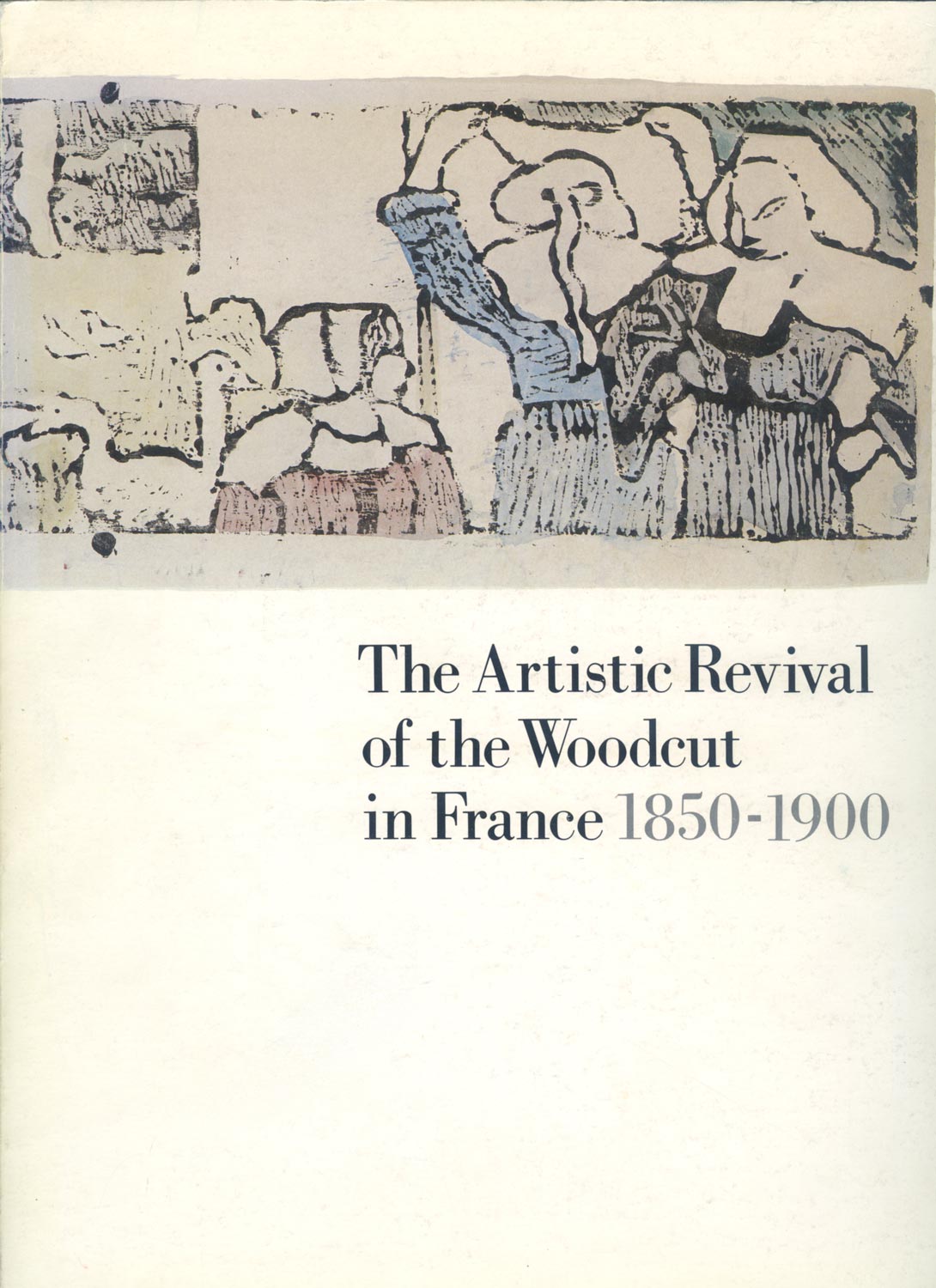
by Jacquelynn Baas and Richard S. Field
Published by the University of Michigan Museum of Art, 1984
The catalogue to a traveling exhibition, The Artistic Revival of the Woodcut in France, 1850-1900 is devoted to an important medium in the development of the Western graphic arts. The concept of a “revival” of the woodcut toward the end of the nineteenth century is to some extent an artificial one. Because of the suitability of the relief process for typographic printing, the use of the woodcut increased steadily from the fifteenth to the nineteenth century. By the 1880s, wood engraving was the predominant graphic art medium for illustrated books and journals.
That same decade, however, saw the development of the more precise and economical photomechanical relief processes – a development that freed creative wood engravers like Auguste Lepère to lead an artistic revival of this simple but beautiful medium that artist such as Paul Gaugin, Alfred Jarry, and Edvard Munch.
The Artistic Revival of the Woodcut in France focuses on the potential of the woodcut for original artistic expression. Jacquelynn Baas discusses technical developments and summarizes the woodcut revival in France, while Richard Field places the nineteenth-century woodcut in an international context, focusing on its artistic expression in England and Germany. The entries that follow document the artists of the woodcut revival and their work. Published over four decades ago, this book remains a key resource for artists, art historians, and collectors.