
Marcel Duchamp and the Art of Life
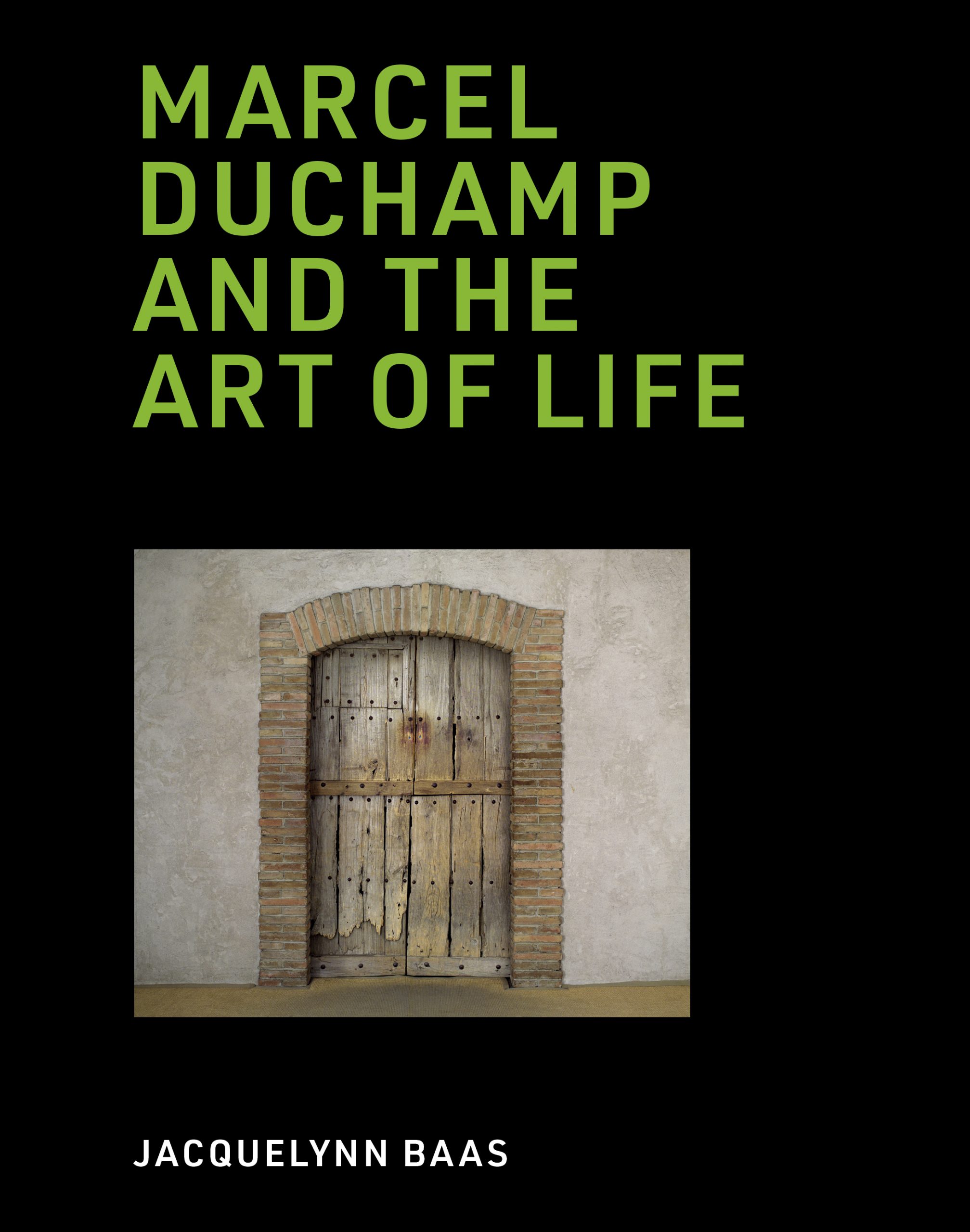
by Jacquelynn Baas
Published by MIT Press, 2019.
A groundbreaking reading of Duchamp’s work as informed by Asian “esoterism,” energetic spiritual practices identifying creative energy with the erotic impulse.
Considered by many to be the most important artist of the twentieth century, the object of intensive critical scrutiny and extensive theorizing, Marcel Duchamp remains an enigma. Duchamp drew on a wide range of sources for his art, from science and mathematics to metaphysics. He may be the most intellectual artist of all time; and yet, toward the end of his life, he said, “If you wish, my art would be that of living: each second, each breath is a work which is inscribed nowhere, which is neither visual nor cerebral. It’s a sort of constant euphoria.”
In Marcel Duchamp and the Art of Life, Jacquelynn Baas offers a groundbreaking new reading of this seminal artist that suggests Duchamp’s version of artistic realization was grounded in Western interpretations of Asian mind training and body energetics designed to transform erotic energy into mental and spiritual liberation. She offers close readings of many Duchamp works, beginning and ending with his final work, the mysterious, shockingly explicit Étant donnés: 1° la chute d’eau 2° le gaz d’éclairage, (Given: 1. The Waterfall, 2. The Illuminating Gas). Marcel Duchamp and the Art of Life speculates that Duchamp viewed art making as part of an esoteric continuum grounded in Eros. It asks us to unlearn what we think we know, about both art and life, to be open to experience.